Monday, August 31, 2015

Your Tax Dollars at Work


An article in the Washington Post this morning titled, "Denali or McKinley? How a 19th century political ‘joke’ turned into a 119-year-long debate," discusses what has apparently been an ongoing issue with Congress regarding the name of the highest mountain in North America.

Mount McKinley is likely a familiar name to most.  While people may not know that it resides in Denali National Park in Alaska, or that it is the tallest mountain In both the U.S. and across the North American continent at over 20,000 feet, when it comes to names of mountains it is probably at least one that comes to mind.  I know that I have wondered previously why it was named after William McKinley, the 25th president, but not enough to actually type "Mount McKinley" into a Google search to then click on the Wikipedia article.Apparently if I had succumbed to investigating this curiosity, I would have found that the name "McKinley" is rather unsettling for a portion of our government.

Though the government officially recognized the name of the mountain as being "McKinley" nearly a century ago - making official the name that had been proposed in 1896 by a gold prospector who was a supporter of McKinley's - numerous people were unhappy with that name and thought that it should remain the name that was given by the native Alaskans: Denali.  Well, those people can finally enjoy a good-night's rest, because President Obama, in one of his more ruthless and courageous actions as President, has made an Executive Order to rename "Mount McKinley" to "Mount Denali".

That's a relief.

Clearly there is an angle to this - why else would the government use its powers to settle this issue?  Let's consider the financial affects that will cascade down from this decision:

  • Every geography book published before August 31st, 2015 is now wrong
    • Who wins: textbook manufacturers and book sellers who will now stand to reap windfalls as all geography books used in educational systems across the country will now have to be replaced
  • Every "Mount McKinley" branded pin, magnet, collectible spoon, and other merchandise just became outdated
    • Who wins: antique and historical collectors whose "Mount McKinley" collection just jumped in value
  • Every tour group and tourist trap that marketed themselves as "McKinley" will have to change their names
    • Who wins: tour groups that are now marketing: "be the first to scale Mount Denali"
Near as I can tell, President Obama must have a sizable collection of Mount McKinley merchandise, have ownership in some portion of the textbook industry, and/or have a travel business in and around Denali National Park, because why else would taxpayer money go towards funding the decision to settle a century-old debate that no one even knew about until today?

Here is a link to the original article from the Washington Post: 


Friday, August 28, 2015

It's a Bird... It's a Plane... It's Supermoon!


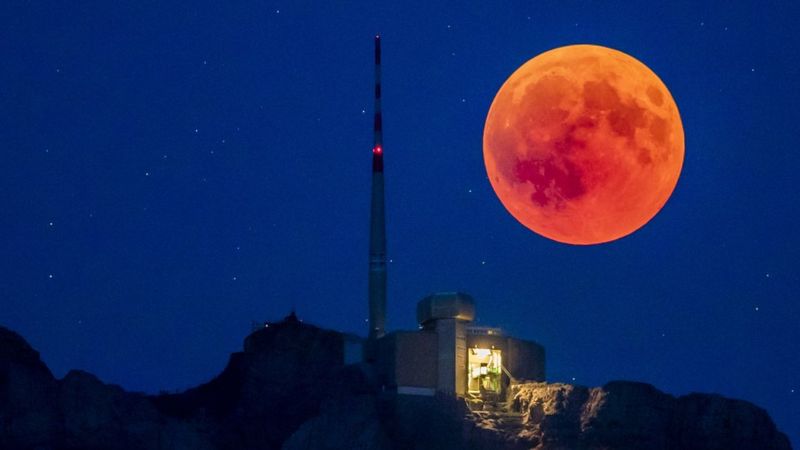
If you happened to look up at the Moon in the past couple nights as it is approaching Full Moon (which completes August 29th), you may have noticed that it seems a bit bigger than usual.  It's not just an illusion of some sort, the Moon will appear larger in the sky as it completes its next three Full Moon cycles.  These three Full Moon cycles have been given the cute term of Supermoons.

Before I explain why this occurs, let me first dispel the false information that will undoubtedly be passed around in the form of email or Facebook Spam.  The Moon will not cover half of the sky.  The Moon will not cause gravitational oscillations that will knock out the power grid or air traffic control stations.  The Moon will not cause massive tidal waves.  The Moon will not become blood red and unleash its fury on the Earth.

On September 27th though, the Moon actually will become blood red as it completes a Full Moon cycle that coincides with the largest of the three Supermoons while simultaneously having a lunar eclipse.  And during lunar eclipses the Moon does take on a blood red appearance at full eclipse - that much is true.

The reason for the enlarged appearance is due to the common property of celestial bodies in that they all have elliptical orbits, and so throughout its orbit the Moon is constantly getting either nearer or further away.  Because the orbital cycle length (27.3 days) is not in exact alignment with the lunar cycle length (29.5 days), there are variations in the distance of the moon from the earth at each of its different phases.  It just so happens that this year, there will be three cycles in a row that are termed Supermoons, which is just the name given Full Moons that occur relatively close to the Moons nearest approach to the earth, or perigee.

While the Moon will not cause any of the aforementioned disasters, one must always be on the lookout for people during Full Moons.  Though there has been no concrete scientific explanation for the affect of the Full Moon on humans, observationally people do seem to exhibit eccentric and erratic behaviors during a Full Moon.  So maybe September 27th would be a good day to just stay in for the evening and enjoy the Lunar trifecta (Supermoon, Full Moon, Lunar Eclipse) from the safety of one's backyard.

Thursday, August 27, 2015

Why the News is Broken

I came to a realization this morning when searching for the subject of today's blog: the "news" as we know it is inherently broken.

Let's look at the mission of any news source.  Most big-name news agencies have altruistic BS slogans they spout off including things like: "truth in reporting"; "on your side"; "most trusted name in news"; and "fair and balanced".  They may pretend these are their motivations, however the truth is that like any business their real motivation is money.  The true mission of any news agency will fall under one or more of these points:

  • Be the first to print (or post)
  • Give priority to news items that appeal to the masses
  • Grab the attention of the viewer or reader using overly-hyped headlines
  • Report the details that sound most controversial; ignore those with real substance
  • Sell advertisements
At the risk of sounding like I am about to repeat my previous post about advertising and the internet, advertising revenue is and always will be the bottom-line motivation of news agencies.  Whereas I appreciate and enjoy supporting content creators that have interesting and entertaining content to provide, I have no such sympathy for general news agencies.

I tend to use Google News to be my primary news aggregator, and what I have observed lately with Google News is that priority of how articles appear in the feed is given either to major news outlets or to the most sensational headlines (regardless of source).  Even though I have no desire to read about the most sensationalized news topic as of late (intentionally omitting reference to that topic), my entire feed across all of my chosen news themes (US, World, Sci/Tech, Science, Technology, Entertainment and Sports) has become watered down by articles working a different angle to that same news story.  This has become the most profoundly obvious evidence that the news is broken.

There is likely pressure on editors and reporters at the individual agencies to find new angles to the current news story, so reporters are massaging the details to try and stand apart.  Certainly they realize that there is nothing "new" here.  The story is the same.  The details are the same.  As a result, articles that really aren't "news" are receiving far more priority and attention because of the revenue they are generating from the masses of people who crave controversy.  Meanwhile, legitimate news stories are getting lost and forgotten.   Google as a news feed is clearly working in tandem with major outlets to entice people to read sensational articles about non-news, because that's the storyline that is getting all of the attention.

It is getting all of the attention because it is being forced down our throats and burnt into our retinas!

Amongst the major news agencies, there is no "truth in reporting" or "fair and balanced".  There is hype and controversy.  And where there is no hype or controversy, there is simulated hype and controversy.  These companies, including Google, are clearly working together to determine what is most news-worthy and deserving of attention based on what will generate the most revenue.  This is why, at least for me, the news is broken.


Wednesday, August 26, 2015

The Age of Connectedness


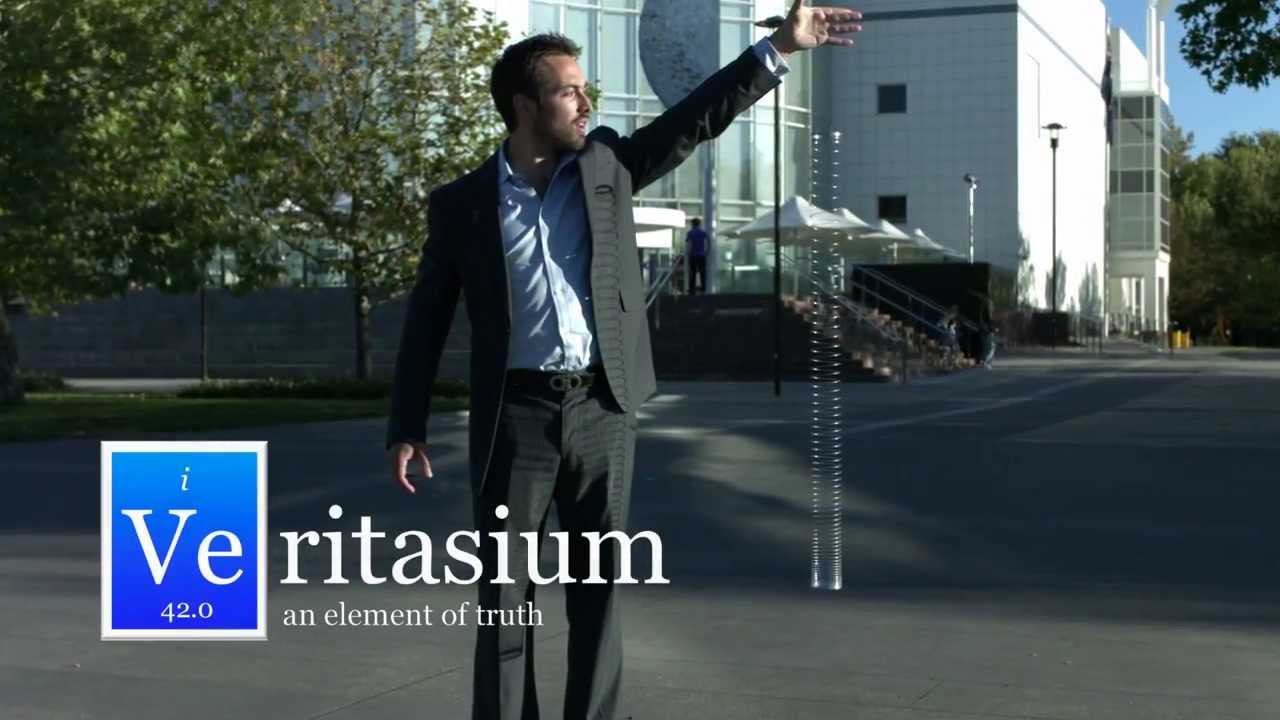
Physicist Derek Muller runs an "edutainment," or educational-entertainment, channel on YouTube called Veritasium.  What makes his videos particularly effective is that is he able to blend scientific concepts with approachable and relatable references that do not require any sort of a math or science background in order to follow.

In his latest video, he discusses some fascinating social behaviors of the connections between people in society through Facebook or other internet platforms, all the while using set theory and combinatorics to further explain the observable patterns (and he doesn't even have to say the words "set theory" or "combinatorics" to do so).

The topic centers around how many (or how few) connections it takes for you to meet or become acquainted with anyone else in the world.  Some of you may remember the game that reached some level of fame around a decade ago called, the Six Degrees of Kevin Bacon.  This followed a similar premise - that through no more than five other actors you could trace any actor, by a movie they were in, back to one that Kevin Bacon was in.  While the game was fun for about 5 minutes, the premise has very important implications in how connected society has now become.

In fact, through the expansion of the user-base of Facebook in conjunction with the spread of internet services into developing countries, it is posited (by none other than the rockstar of Astronomy himself, Neil deGrasse Tyson, while making a cameo appearance) that now the number may have reduced from six connections between you and anyone else in the world, down to five or maybe even four.  The connections you have today, through your network of friends, could be no more than 4 handshakes away from anyone else in the world.

Because of how the prevalence of the internet is allowing more and more people to gather in digital assemblies, preliminary discussions have begun on whether the current era should be ascribed "The Age of Connectedness".  While I think it is a bit premature to delineate a brand new age, given the fact that we just finally labeled "The Information Age" in the last decade or so, I agree that this is just the beginning of how important digital, social connections will become in society.  That said, I am not sold on the idea that the level of connectedness will only continue to grow as time goes on.  With all of the information breaches happening lately, I am predicting an eventual backlash against the proliferation of these connections.  Perhaps someday in the future there will be a rebound from all of this, we'll enter into "The Age of Isolation".

For now, I just recommend you check out the video that formed the basis of this post in the link below and hear about it from Derek Muller himself.  If you enjoy the video and want to support his future efforts, don't forget to click the button to subscribe to Veritasium.


Tuesday, August 25, 2015

It's Like a Mediterranean-Influenced Chipotle

Visit them online: Troy Grille

Tucked in-between Blue: A Goodwill Boutique and the Stone Tavern on Main Street in Kent, Ohio is a small Mediterranean restaurant called Troy Grille.  Like many other places that have enjoyed the revitalization of the downtown area, Troy Grille is small operation that identified a niche to be filled - in this case, Mediterranean fast-food (no, Gyro Bob doesn't count).  In contrast to some of the other local dining establishments, Troy Grille offers a wide selection of reasonably healthy options, and the familiar sounding "wrap-bowl-salad" choices that harken back to the current king of Mexican fast food, Chipotle.

What makes Troy Grille stand out is that the food is really good.   My wife and I stopped in yesterday for the first time.   We both ordered bowls - she chose a falafel bowl, and I went with a beef shwarma bowl - and then we picked from white rice and bulgar to form the basis of the bowl.  Between the two, i would recommend the bulgar - it is nicely seasoned and has a bit more going on with it than the white rice.  After choosing our base, we were presented a variety of vegetables and sauces that can be layered on, including standard items like onions, pickles, black olives, etc. as well as Mediterranean staples like cacik (which is similar to the Greek tzatziki), feta, hummus, and grape leaves.  Some items, like the hummus and grape leaves, will cost a little extra but it is well worth it.

Once we chose all of the veggies and sauces for the bowls, they topped them with the freshly heated main items (falafel and beef shwarma).  Let me just say, the beef shwarma isn't merely seasoned strips of tender beef.  It comes out in this delightful collage of beef, onions, tomatoes and mozzarella all melted together into a cohesive unit.

My wife and I were both very pleased with our respective choices, and if you know anything about my wife and ethnic cuisine, her being pleased speaks volumes.  She preferred the falafel over the beef shwarma, and I enjoyed both.  Though I have to admit that despite my skepticism of their claim to have the best falafel around, it still met all expectations.

It is important to support small, locally owned shops and restaurants to keep cities like Kent from being overrun with corporate establishments.  So the next time you happen to be wandering through Kent, be sure to check out Troy Grille.

Monday, August 24, 2015

Fans Only Work When You're Sweaty


An article published in Wired this past week (http://www.wired.com/2015/08/fans-dont-always-make-things-cooler/) explored the myths and reality of cooling off with a fan.  The researchers performed several tests that demonstrated how running fans on a warm day could actually be counter-productive.

The problem arises around the fact that fans are electrical devices, and that in order for those devices to work, they need to be fed with energy. Running a fan on low will consume a little bit of energy; running it on high will consume more energy.  With all of the electricity flowing through the fan, the wires and motors will heat up.  If you've ever touched the backside of the fan running on full-blast, you've surely noticed that it can get quite warm.

As air passes over and around the motor before being shot out the front, it will heat up.  In the test performed by the researchers that simulated an extreme example of a closed room, whereby the fan was placed inside a styrofoam box, the temperature inside the box heated up at a very steady rate of two degrees (Fahrenheit) a minute.  Imagine then having this inside a bedroom.  If there is no window or other source of cooler air, the air inside the room will continue to pass over the heated motor and the temperature will continue to rise.  Perhaps this is why waking up after running a fan all night, you sometime feel like you're in a sauna.

The one variable that can alter this behavior however, is sweat.  Sweat, being the body's natural air conditioning system, will actually lower body temperature as they evaporate.  Enter the fan.

While running a fan has been shown to heat air to a higher temperature, particularly in a closed room, standing in front of a fan will cool you off.  The air rushing over the beads of sweat will cause them to evaporate quicker, which in turn will cool you off quicker.  So fans definitely do have their place in the hot summer months.  Just remember though, if you're not sweating, running the fan may be working against you; unless of course your goal is to raise the temperature of the room to the point that you are sweating, in which case, maybe you should save some money on your energy bill by ditching the fan and just opening a window.

Friday, August 21, 2015

Alien Overlords Protected Earth from Itself


In one of the more far-fetched news stories recently, Edgar Mitchell, an Astronaut on Apollo 14 and the sixth of twelve people to walk on the moon, shared his theory on how the Cold War between Russia and the United States ended: Aliens.

That's right, based on personal observations and from stories he heard from people who worked in Roswell and around missile facilities like White Sands, he subscribes to the theory that aliens visited these locations and intervened in test operations.  The aliens were purported to have disabled the functioning of certain missiles and to have shot down others that were fired during test sequences.  Roswell, New Mexico, has long been known for being a hot-bed of suspicious activity including the sightings of strange aircraft or other light displays that have never been fully explained.  The problem however, is that there has never been any public announcement of the presence of intelligent beings from other planets from a truly credible source of information.  Perhaps I am just too much of a skeptic, but no, I am not willing to accept Edgar Mitchell as being that ever-missing credible source of information.

Perhaps more plausible explanations for the oddities that were blamed on alien intervention could be: these were tests and experiments, that's what they do - fail sometimes; employees of these locations valued the lives of their families and intentionally disabled the missiles in an effort to prevent all-out war; power surges; or static electricity (it is New Mexico, afterall).

The most glaring hole in the alien hypothesis is: how would the aliens know where to find these secret government missile installations?  I have my own hypothesis on this.  They aren't just aliens - that's crazy.  They are TIME-TRAVELING ALIENS!  Yes, it would all make sense.  In a future where nuclear war took place and the Earth was blown to an inhabitable waste, aliens from the future who wanted to make future Earth their home, went back in time to when the nuclear war started and tampered with the missiles and equipment so frequently that neither Russia nor the United States were confident in their ability to blow up their enemy without blowing themselves up, and this ultimately led to them electing to never use these weapons.  Now it all makes sense.

All kidding aside, I do absolutely believe that within the vastness of the Universe, there are civilizations far more advanced than ours (considering the hundreds of millions of years wasted on terrible lizards, and since modern humans have gotten where we have in just tens of thousands of years).  It is also plausible that some of the theoretical concepts for space travel that are currently being explored on Earth, like near light-speed propulsion, have already been figured out by these civilizations.  However it is still unlikely that visitors from these civilizations are just hanging out in the New Mexico dessert, flying around and putting on a show for the UFO enthusiasts.  While it is my hope that in this lifetime we will make a discovery that shows definitively that life exists elsewhere from Earth, the thought that we will establish first contact and form galactic treaties with our alien overlords is, at least for now, purely science fiction.